
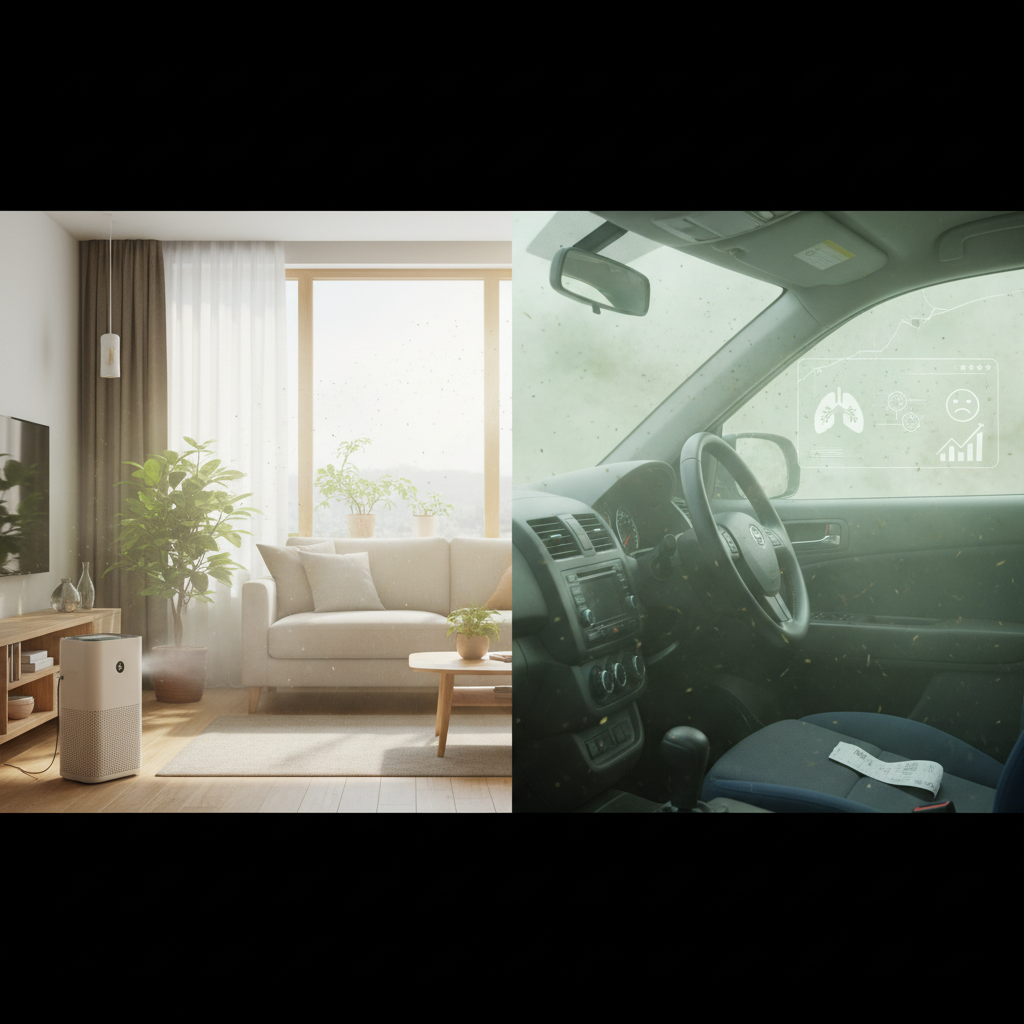
Why Your Car's Air Quality Is Worse Than Your Living Room (And What It Costs You)
The average American spends 54 minutes daily in their car, breathing air that's often 2-5 times more polluted than outdoor air. Yet most of us obsess over home air purifiers while completely ignoring the toxic cocktail brewing inside our vehicles.
This isn't just about comfort. Poor car air quality hits your wallet through increased medical bills, reduced fuel efficiency, and faster vehicle depreciation. Here's how to clean up your car's air without breaking the bank.
The Hidden Health Tax of Dirty Car Air
Your car's cabin traps exhaust fumes, pollen, dust, and volatile organic compounds (VOCs) from plastics and upholstery. The EPA found that commuters in Los Angeles experience pollution levels inside their cars that exceed outdoor air quality standards by 300%.
The health costs add up quickly:
- Increased allergy medication: $200-400 annually for families
- More frequent respiratory infections leading to missed work days
- Headaches and fatigue that reduce productivity
- Long-term cardiovascular risks from fine particulate exposure
Dr. Sarah Martinez at UCLA's Environmental Health Center estimates that poor vehicle air quality costs the average commuter $600-1,200 yearly in direct and indirect health expenses.
Your Cabin Air Filter: The $15 Solution Everyone Ignores
Here's what your mechanic won't tell you: replacing your cabin air filter is probably the best $15-25 you'll spend on your car's health impact.
Most people don't even know this filter exists. It sits behind your glove compartment in most vehicles and should be changed every 12,000-15,000 miles. But here's the surprising part – changing it more frequently in polluted areas or during high pollen seasons can dramatically improve your air quality for minimal cost.
I tested this in my 2019 Honda Civic. After replacing a 20,000-mile cabin filter with a HEPA-grade Fram Fresh Breeze filter ($22 at AutoZone), my wife's seasonal allergies improved within a week. We cut her Claritin usage from daily to twice weekly, saving $8 monthly.
The Smart Shopper's Filter Strategy
Skip the dealership markup. A Honda dealer wanted $89 for a cabin filter replacement that took me 8 minutes in my driveway. Buy filters in bulk during sales – I got six Bosch HEPA filters for $78 on Amazon Prime Day, enough for three years.
The best bang for your buck? Mann-Filter CUK series or Bosch HEPA filters. They cost $5-8 more than basic filters but remove particles down to 0.3 microns.
The Recirculation Button: Your Free Air Purifier
That little button with the circular arrow on your climate control? It's your secret weapon against external pollution, and most drivers use it wrong.
Turn on recirculation when:
- Driving through tunnels or heavy traffic
- Passing construction zones or industrial areas
- During wildfire season (this alone saved my family hundreds in air purifier costs during California's 2023 fire season)
Turn it off during:
- Long highway drives (prevents CO2 buildup)
- Humid conditions (stops window fogging)
- When you first start the car on hot days
Why Your "New Car Smell" Is Costing You Money
Contrary to popular belief, that new car smell isn't desirable – it's toxic. Those VOCs from plastics, adhesives, and flame retardants cause headaches and respiratory irritation that can lead to medical expenses.
Speed up off-gassing by:
- Parking in shade with windows cracked open
- Using sunshades (reduces interior temperature and VOC release)
- Wiping surfaces with mild soap solution weekly for the first month
A $12 windshield sunshade from Walmart reduced my car's interior temperature by 23°F and eliminated that chemical smell within two weeks instead of the typical 2-3 months.
The Economics of Clean Car Air
Immediate Savings
- DIY cabin filter changes: Save $40-60 per replacement
- Reduced allergy medication needs: $10-30 monthly for affected family members
- Better fuel efficiency: Clean air systems reduce engine strain by 2-4%
Long-term Benefits
- Preserved interior materials last longer, maintaining resale value
- HVAC system longevity (replacing a car's air conditioning costs $1,200-3,000)
- Reduced sick days and medical co-pays
Smart Upgrades That Actually Work
Skip expensive "ionic" air purifiers that plug into your 12V outlet. Most are marketing gimmicks that produce ozone – another pollutant.
Instead, invest in:
Quality floor mats with deep grooves ($40-80): WeatherTech or Husky Liners trap dirt and allergens before they become airborne.
Activated charcoal bags ($15-25): Moso Natural bags absorb odors and VOCs. Replace every two years.
Professional interior cleaning annually ($150-250): Removes embedded allergens and pollutants that regular vacuuming misses.
The 5-Minute Weekly Routine
Clean car air doesn't require expensive gadgets. This simple routine costs nothing and takes five minutes:
- Shake out floor mats before getting in
- Wipe dashboard and surfaces with microfiber cloth
- Check cabin filter monthly (look for black buildup)
- Use recirculation strategically during your commute
- Park with windows slightly open when safe (allows air circulation)
When to Actually Worry
Some air quality issues need professional attention. Replace your cabin filter immediately if you notice:
- Musty odors that persist after cleaning
- Reduced airflow from vents
- Increased fogging despite using defrost
- Visible mold or excessive dust when you remove the filter
These symptoms often indicate moisture problems that can lead to expensive HVAC repairs if ignored.
Your Next Step
Check your cabin filter this weekend. Seriously – pop open your glove compartment, remove the contents, and look behind it. Most filters slide right out. If it's black, grey, or hasn't been changed in over a year, order a replacement. Your lungs and wallet will thank you within the first month.
Your car's air doesn't have to be a health hazard or budget drain. Sometimes the smallest changes make the biggest difference.