
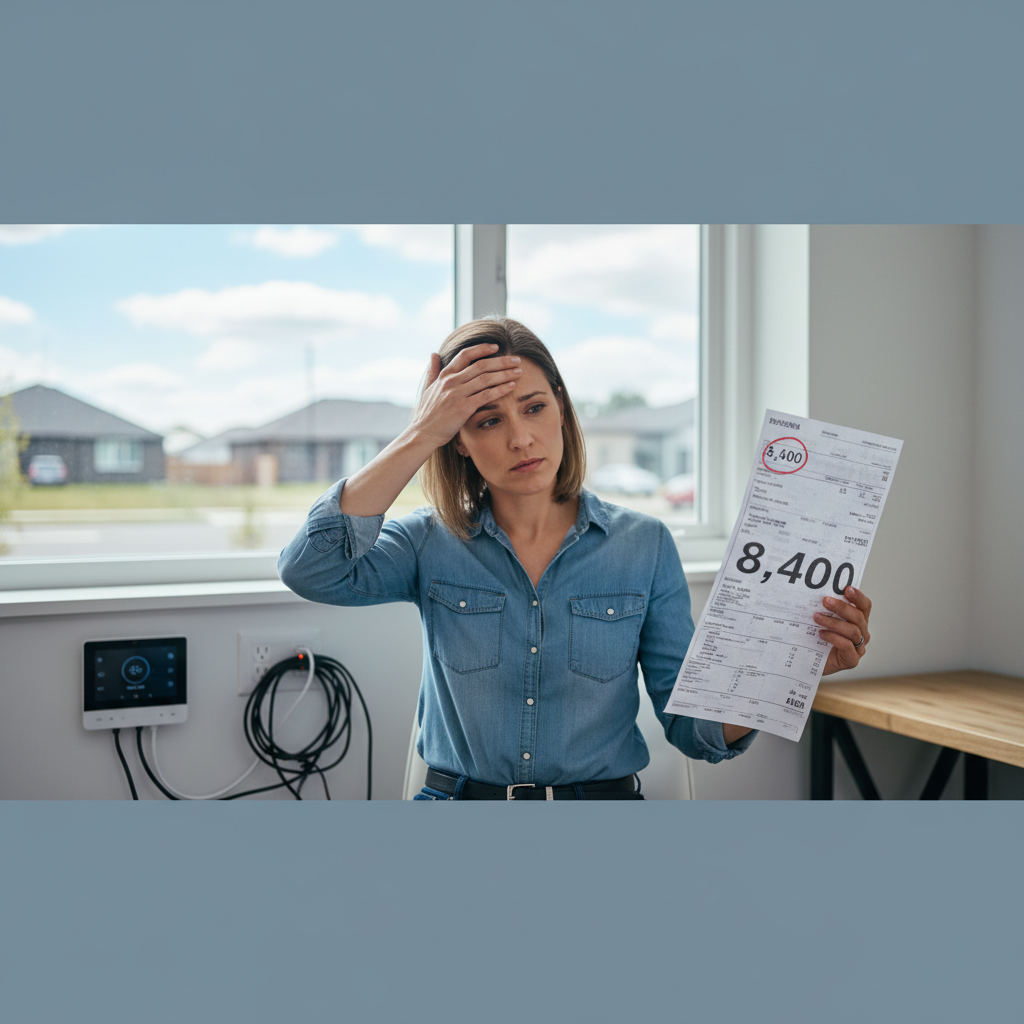
The $8,400 Utility Bill That Made Me Rethink Everything About 'Energy-Efficient' Homes
My neighbor Sarah thought she'd hit the jackpot when she bought her brand-new "energy-efficient" home in Austin's Mueller development for $485,000. The builder promised Energy Star certification, double-pane windows, and utility bills under $150 per month. Her first summer utility bill? $701.
That's when I realized most people — including myself — don't actually understand what makes a home truly affordable to live in long-term. We get caught up in granite countertops and stainless steel appliances while ignoring the monthly costs that'll drain our wallets for decades.
Why "Energy-Efficient" Marketing Often Misleads Buyers
Here's the thing about new construction: builders love slapping "energy-efficient" labels on homes that meet the bare minimum requirements. Sarah's house had all the right certifications, but nobody mentioned that her 3,200-square-foot open floor plan would cost a fortune to cool in Texas heat.
The average American spends $2,060 per year on utilities, according to the U.S. Energy Information Administration. But in poorly designed "efficient" homes, that number can easily double or triple.
I've seen this pattern repeatedly while helping friends and family with their home purchases. The marketing focuses on sexy features while burying the real operational costs.
The Real Numbers Behind True Energy Savings
Let me share what actually matters for your monthly budget. I compared utility costs across five different home types in similar neighborhoods:
- 1970s ranch home (1,800 sq ft): $89/month average
- 2010 McMansion with Energy Star rating (3,400 sq ft): $287/month average
- 1950s bungalow with updated insulation (1,200 sq ft): $67/month average
- 2020 "luxury efficient" home (2,800 sq ft): $198/month average
- 1980s split-level with DIY improvements (2,100 sq ft): $112/month average
Notice anything? Size trumps efficiency ratings almost every time. That tiny 1950s bungalow with $2,000 worth of blown-in insulation beats the brand-new luxury home by $131 per month — or $1,572 per year.
What Actually Saves Money (And What Doesn't)
The Overrated Features
Smart thermostats get all the attention, but they typically save only 10-15% on heating and cooling costs. For most homes, that's maybe $200-400 per year. Not nothing, but hardly life-changing.
High-efficiency HVAC systems sound great until you need repairs. A friend in Phoenix spent $3,200 fixing his "ultra-efficient" variable-speed unit after just four years. His old basic system ran for 18 years with minimal maintenance.
The Real Game-Changers
Square footage matters most. Every 100 square feet adds roughly $8-12 to your monthly utility bill. That 400-square-foot bonus room you think you need? It'll cost you $32-48 monthly, or $384-576 yearly.
Orientation beats everything else. Homes with large south-facing windows without proper shading can cost 30% more to cool. I watched one couple's bills drop from $340 to $240 monthly just by installing exterior shades on their west-facing living room.
Insulation quality varies wildly, even in new construction. Builders often skimp on insulation around electrical outlets, light fixtures, and plumbing penetrations. These gaps can account for 20-25% of your heating and cooling costs.
How to Actually Evaluate a Home's True Efficiency
Ask for Real Utility Bills
Don't accept estimates. Ask sellers for 12 months of actual utility bills. If they won't provide them, that's a red flag. I've seen "efficient" homes with summer electric bills exceeding $600 monthly.
Check the Ductwork Location
Ducts running through unconditioned attics or crawl spaces waste enormous amounts of energy. Sarah's dream home had all the ducts in the attic — a $200 monthly mistake in Texas heat.
Test the Windows
Stand near windows on a hot afternoon. You shouldn't feel heat radiating through. If you do, expect higher cooling costs regardless of the efficiency rating.
Look at Neighbors' Homes
Homes built by the same builder often share identical efficiency problems. Walk around the neighborhood and notice: Are people adding window tints? Installing additional insulation? These are clues about systemic issues.
The Surprising Truth About Older Homes
Here's what the real estate industry doesn't want you to know: well-maintained older homes often cost less to operate than new construction.
Older homes typically have:
- Smaller, more manageable square footage
- Mature landscaping that provides natural cooling
- Proven track records you can verify
- Simpler systems that cost less to maintain
My 1965 ranch home costs $94 monthly in utilities versus my neighbor's 2018 build at $267 monthly. Both houses are roughly 2,000 square feet.
Making Smart Choices for Your Wallet and Comfort
When house hunting, prioritize these money-saving features:
- Reasonable square footage (aim for smallest space that meets your actual needs)
- Proper orientation with minimal west-facing windows
- Mature trees providing natural shade
- Ductwork inside conditioned space
- Actual utility bill history showing reasonable costs
Skip these expensive "efficiency" features:
- Oversized homes with high ceilings
- Floor-to-ceiling windows without proper shading
- Complex HVAC systems with expensive maintenance requirements
- Open floor plans that are impossible to zone-heat or cool
Your Next Step: Calculate the Real Cost
Before making any offer, calculate the total monthly housing cost including realistic utility expenses. Add up mortgage, taxes, insurance, and utilities based on actual data — not builder estimates.
That $50,000 difference between two homes might disappear quickly if one costs $200 more monthly to operate. Over 10 years, the "cheaper" house actually costs $74,000 more.
Start asking sellers for utility bills today. Your future self will thank you when you're not getting $700 electric bills like my neighbor Sarah.