
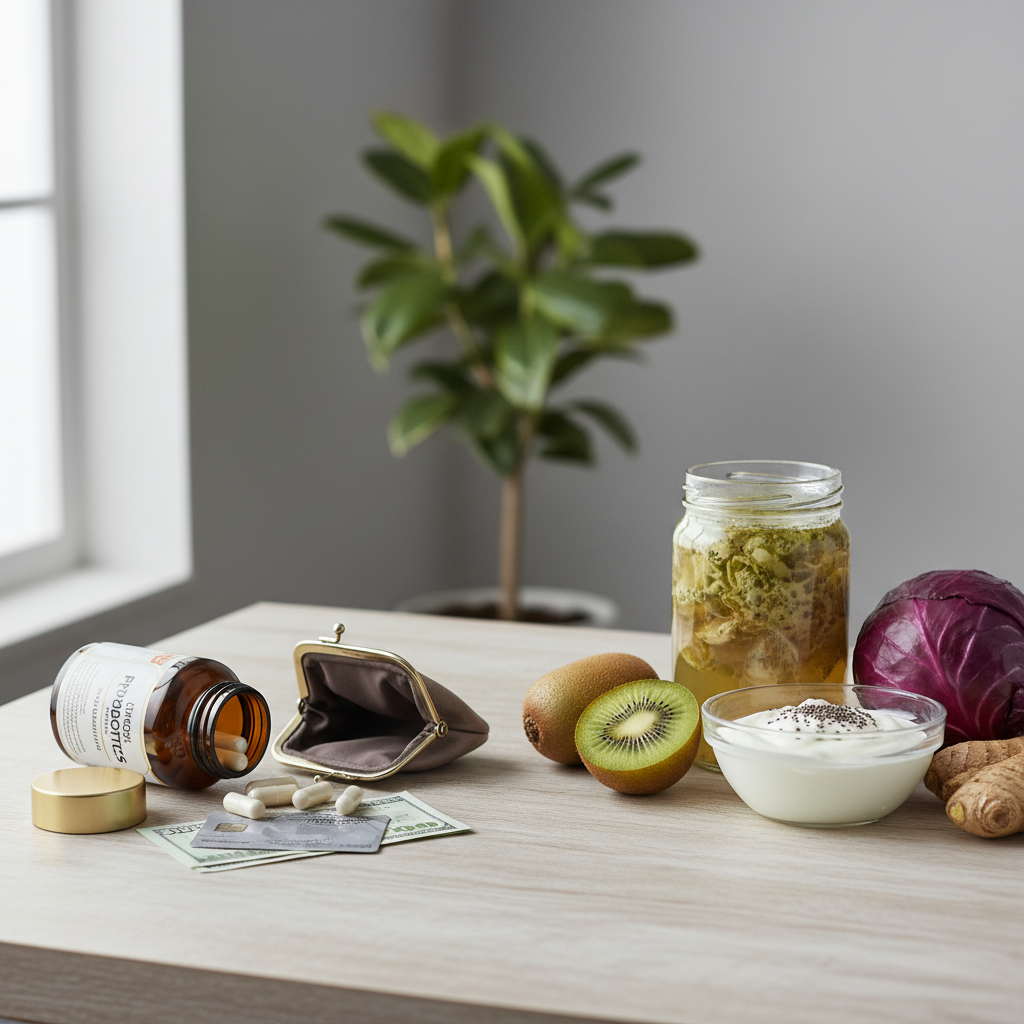
Why Your Expensive Probiotic Isn't Working (And What Actually Heals Your Gut)
Sarah from Denver spent $89 per month on Garden of Life's Dr. Formulated Probiotics for eight months straight. She tracked her bloating, energy levels, and digestive symptoms religiously in her phone app. The result? Zero improvement.
She's not alone. Americans spend $7.1 billion annually on probiotic supplements, yet most people see minimal benefits. The reason isn't that gut health doesn't matter—it absolutely does. The problem is we're approaching it completely wrong.
The Probiotic Marketing Machine vs. Reality
Walk into any CVS or Whole Foods and you'll see walls of probiotic bottles promising miraculous gut transformations. These supplements typically contain 10-50 billion CFUs (colony forming units) of various bacterial strains, usually Lactobacillus and Bifidobacterium species.
But here's what the supplement companies don't advertise: your stomach acid kills most of these bacteria before they reach your intestines.
Dr. Eamonn Quigley, a gastroenterologist at Houston Methodist Hospital, published research showing that only 10-40% of probiotic bacteria survive the journey through stomach acid, even in enteric-coated capsules. That $89 bottle Sarah bought? Most of it ended up as expensive urine.
What Actually Builds a Healthy Microbiome
Your gut contains roughly 100 trillion bacteria—about the same number as human cells in your body. These microorganisms influence everything from mood and immunity to weight management and chronic disease risk.
The key insight that changed my approach to gut health: you don't need to add more bacteria. You need to feed the beneficial bacteria already living there.
Prebiotic Foods That Work Better Than Pills
Prebiotics are specific types of fiber that serve as food for beneficial gut bacteria. Unlike probiotics, prebiotics survive stomach acid and reach your colon intact. Here are the most effective options:
- Green bananas and plantains: Contain resistant starch that feeds Bifidobacterium species
- Jerusalem artichokes: Pack 2-3 grams of inulin per serving (more than most prebiotic supplements)
- Cooked and cooled potatoes: The cooling process creates resistant starch
- Garlic and onions: High in fructooligosaccharides (FOS)
- Oats and barley: Provide beta-glucan fiber
I recommend starting with one serving daily of any of these foods. Your beneficial bacteria will multiply naturally when given proper fuel.
The Fermented Food Advantage
Here's where things get interesting. Recent research from Stanford University followed 36 adults for 10 weeks, comparing those who ate fermented foods versus those who ate high-fiber foods.
The fermented food group showed significantly greater microbiome diversity and reduced inflammatory markers. They consumed kimchi, kefir, kombucha, and sauerkraut daily—not expensive supplements.
The surprising part? The high-fiber group showed less improvement than expected. This suggests that naturally fermented foods provide benefits beyond just adding bacteria.
The Gut Health Protocol That Actually Works
Week 1-2: Remove the Irritants
Before adding beneficial bacteria, stop damaging the ones you have. The biggest culprits:
- Artificial sweeteners: Sucralose and aspartame alter gut bacteria within days
- Excessive alcohol: More than 7 drinks per week disrupts the microbiome
- Unnecessary antibiotics: Each course can reduce bacterial diversity for months
- Ultra-processed foods: These feed harmful bacteria while starving beneficial ones
Week 3-4: Feed Your Microbes
Introduce prebiotic foods gradually. I tell my clients to add one new prebiotic food every three days. This prevents the gas and bloating that happens when you dramatically increase fiber intake overnight.
Start with:
- One small green banana daily
- A serving of sauerkraut or kimchi with lunch
- Garlic and onions in your cooking (if tolerated)
Week 5+: Diversify and Maintain
Your goal is microbiome diversity, not high numbers of any single bacterial strain. Eat 30 different plant foods per week. This isn't as hard as it sounds—herbs, spices, nuts, seeds, fruits, and vegetables all count.
Keep a simple tally in your phone notes app. Most people discover they eat the same 10-15 plant foods repeatedly.
When Probiotics Actually Make Sense
I'm not anti-probiotic entirely. Specific situations where targeted probiotic supplementation helps:
- During or after antibiotic treatment: Saccharomyces boulardii (a beneficial yeast) helps prevent C. difficile infections
- Traveler's diarrhea prevention: Lactobacillus GG shows solid research for this specific use
- IBS with predominant diarrhea: VSL#3 (now called Visbiome) contains eight specific strains proven effective in clinical trials
But for general gut health in healthy adults? Food works better than pills.
The Hidden Cost of Gut Health Neglect
Poor gut health isn't just about digestive symptoms. Research links microbiome imbalance to:
- Depression and anxiety (the gut-brain axis is real)
- Autoimmune conditions like rheumatoid arthritis
- Metabolic syndrome and type 2 diabetes
- Increased infection risk
Treating these conditions costs thousands annually. Sarah's $89 monthly probiotic habit seems cheap by comparison—except it wasn't helping.
Your Next Step
Stop buying expensive probiotic supplements and start this week with one simple change: add a serving of sauerkraut to your lunch daily. Buy it from the refrigerated section (not shelf-stable), and choose brands like Bubbies or Farmhouse Culture that contain live cultures.
Your gut bacteria don't need a $90 monthly allowance. They need real food.