
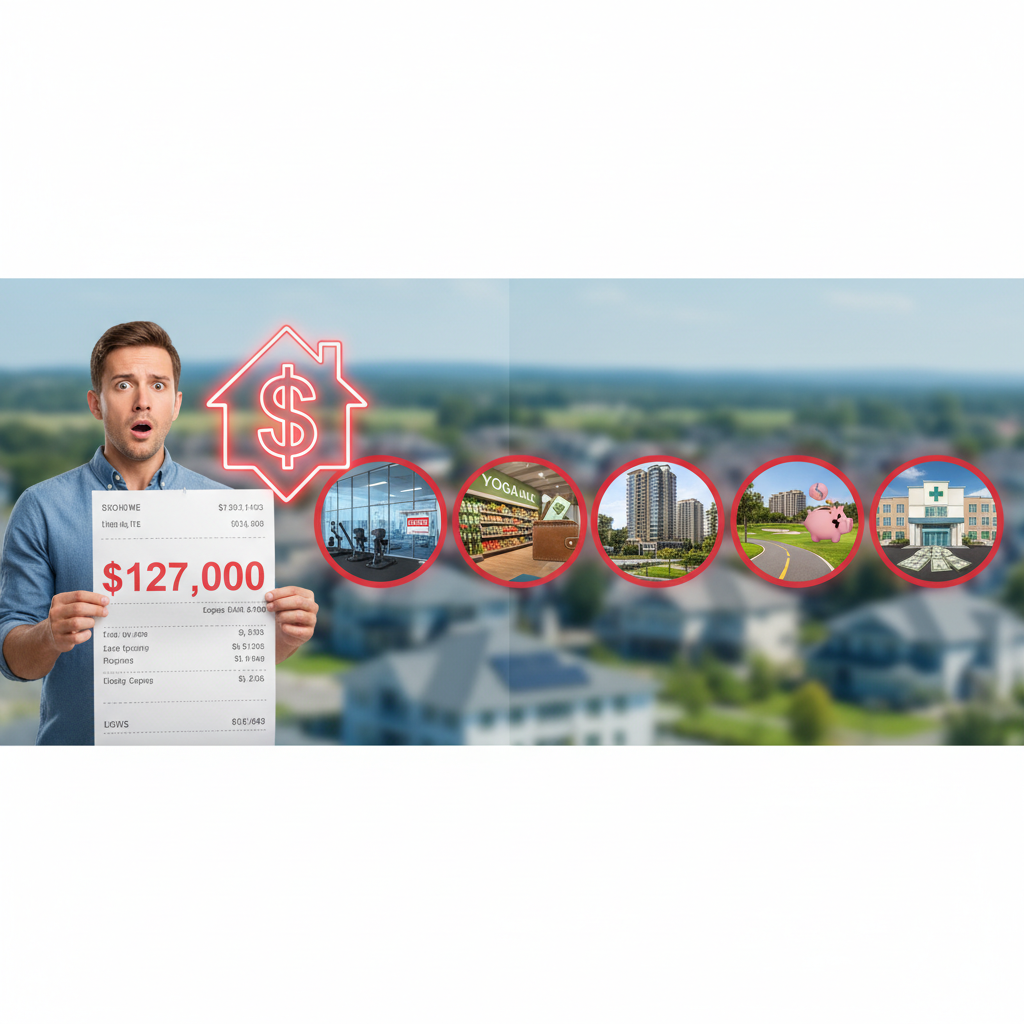
The $127,000 Mistake: Why Buying Near These 5 'Healthy' Places Actually Hurts Your Finances
Sarah Martinez paid $890,000 for a 3-bedroom home in Boulder, Colorado, specifically because it was three blocks from Whole Foods and had mountain biking trails behind her backyard. Two years later, she discovered her "health-conscious" location choice cost her $127,000 compared to a nearly identical house just 15 minutes away.
The real estate industry loves selling homes based on proximity to farmers markets, yoga studios, and organic cafes. But here's what they won't tell you: these "healthy" locations often create financial traps that can derail your long-term wealth building goals.
The Premium Health Tax Nobody Talks About
Homes near popular wellness destinations carry what I call a "health premium" — extra costs that go far beyond the mortgage. Let's break down the real numbers:
Boulder vs. Longmont, Colorado (15 minutes apart):
- Average home price in Boulder: $890,000
- Average home price in Longmont: $520,000
- Annual property taxes in Boulder: $8,900
- Annual property taxes in Longmont: $5,200
- Grocery costs (Boulder has limited chain stores): 23% higher
That's an extra $370,000 upfront, plus $3,700 annually in taxes, plus roughly $2,800 more per year in groceries. Over 10 years? You're looking at $435,000 in additional costs.
The kicker? Sarah can drive to those same hiking trails in 12 minutes from Longmont.
Five "Healthy" Locations That Drain Your Wallet
1. Walking Distance to Whole Foods or Trader Joe's
Real estate agents love this selling point, but proximity to premium grocery stores often signals an area with inflated living costs across the board.
In Austin, Texas, homes within a 10-minute walk of Whole Foods average $150,000 more than comparable properties near regular H-E-B stores. You could buy $150,000 worth of organic groceries and still come out ahead — that's roughly 15 years of premium food shopping.
2. Neighborhoods with Multiple Yoga Studios and Fitness Boutiques
Sure, having CorePower Yoga and SoulCycle nearby sounds convenient. But these businesses cluster in high-rent districts, which drives up housing costs.
Manhattan Beach, California, has 12 yoga studios within a 2-mile radius. The median home price? $2.1 million. Drive 20 minutes inland to Torrance, and you'll find plenty of yoga options with home prices averaging $850,000.
3. Farmers Market Districts
Weekly farmers markets create vibrant communities, but they also signal gentrification and rising property values.
The Pearl District in Portland saw home values increase 340% after the Saturday Market became a major draw. Early buyers did well, but anyone purchasing now pays a massive premium for market access you could get by driving 15 minutes once a week.
4. "Walkable" Downtown Areas with Bike Lanes
Walkability scores get weaponized by real estate marketing. High walkability often means high density, limited parking, and premium pricing for basic services.
In Seattle's Capitol Hill neighborhood (Walk Score: 98), a 1,200-square-foot condo costs $750,000. In Ballard (Walk Score: 89, still very walkable), similar condos run $520,000. You can buy a really nice bike with that $230,000 difference.
5. Near Popular Hiking Trails or Parks
Here's the contrarian take that'll surprise most people: homes right next to popular outdoor recreation often make terrible investments.
Properties adjacent to Runyon Canyon in Los Angeles command huge premiums but suffer from constant foot traffic, parking issues, and noise. Homes literally across the street from the trailhead sell for 25% more than identical houses six blocks away — but those buyers deal with 4 AM hikers, limited street parking, and weekend crowds.
You can drive to most hiking trails in under 20 minutes. Is saving that drive time worth $200,000?
The Hidden Costs Keep Coming
HOA Fees in "Wellness Communities"
Planned communities built around health themes — like those with community gardens, fitness centers, and walking trails — often charge $300-600 monthly HOA fees. That's $3,600-7,200 per year for amenities you might use occasionally.
Service Industry Markup
Areas known for health-conscious residents attract businesses that charge premium prices. Restaurants, coffee shops, and services in these neighborhoods often cost 20-40% more than similar options elsewhere.
The Maintenance Reality
Those charming older homes in walkable neighborhoods with character? They often need significant updates to electrical, plumbing, and HVAC systems. Budget an extra $20,000-50,000 in the first few years for repairs that newer suburban homes won't need.
A Smarter Approach to Healthy Living and Wealth Building
Instead of paying premium prices for proximity, buy the best house you can afford in a solid neighborhood 10-20 minutes from these amenities. Here's why this strategy works better:
- You capture similar lifestyle benefits without the location premium
- More house for your money means better long-term equity building
- Lower ongoing costs (taxes, utilities, services) free up money for actual health investments
- You avoid the "location lock-in" that happens when you overpay for convenience
Take that $150,000 in savings and invest it in index funds earning 7% annually. After 20 years, you'll have an extra $580,000. That buys a lot of Uber rides to yoga class.
The Real Health Investment
The healthiest financial decision is often buying a great house in a good school district with reasonable costs, then using your savings for things that actually improve your wellbeing: a home gym setup, high-quality food, preventive healthcare, and stress-reducing emergency funds.
Sarah eventually sold her Boulder house and moved to Longmont. She now bikes to those same trails, shops at the same Whole Foods (they opened one there too), and has an extra $300,000 in her investment accounts.
Stop paying premium prices for proximity to health trends. Your future wealthy self will thank you for choosing financial fitness over location bragging rights.