
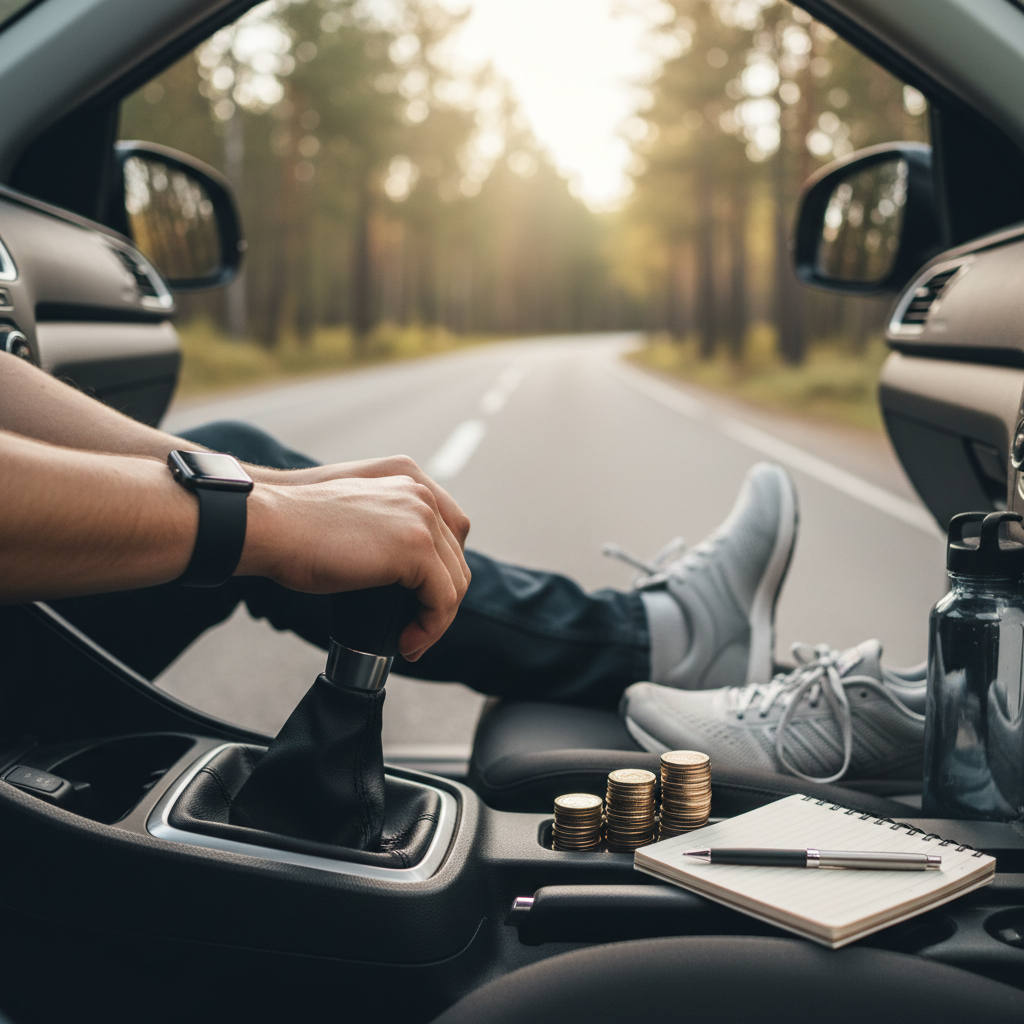
Why Your Next Car Should Be a Manual: The Hidden Financial and Health Benefits Nobody Talks About
Last month, my neighbor Jake spent $3,200 to replace the CVT transmission in his 2017 Nissan Sentra with only 89,000 miles on it. Meanwhile, my 2019 Honda Civic Si with a 6-speed manual? Zero transmission problems and $847 less expensive when I bought it new.
Stick shifts are supposedly dying out, but here's what the car industry won't tell you: choosing a manual transmission might be one of the smartest financial decisions you can make. And the health benefits? They're real too.
Manual Cars Cost Less to Buy (And Keep)
The price difference between manual and automatic versions of the same car typically ranges from $800 to $1,200. That's money you keep in your pocket from day one.
Take the 2024 Honda Civic Hatchback. The manual LX trim starts at $24,200, while the CVT automatic version costs $25,200. The Subaru Impreza shows an even bigger gap - $1,200 between manual and CVT options.
Maintenance Costs Tell the Real Story
Here's where manual transmissions really shine financially. Automatic transmission fluid changes cost $150-$300 every 30,000-60,000 miles depending on your car. Manual transmissions? Most need gear oil changes every 60,000-100,000 miles at about $80-$120.
The big difference comes with repairs. When an automatic transmission fails, you're looking at $2,500-$4,500 for a replacement or rebuild. Manual transmission clutch replacement runs $1,200-$2,000, and clutches typically last 80,000-120,000 miles with proper driving.
My friend Sarah drives a 2015 Volkswagen Golf with a manual transmission. She's at 135,000 miles on the original clutch with zero transmission-related repairs.
The Surprising Health Benefits
Driving stick engages your brain and body in ways automatics simply can't match. You're constantly making micro-decisions about gear selection, clutch engagement, and rev matching. This mental engagement can actually improve focus and reduce the highway hypnosis that makes long drives dangerous.
Better Physical Activity While Driving
Shifting gears means you're using both arms regularly instead of just steering. Your left leg stays active working the clutch pedal. These small movements add up over thousands of miles and years of driving.
Dr. Michael Chen, a physical therapist in Portland, told me he notices fewer complaints about lower back stiffness from patients who drive manual cars regularly. The constant small position changes keep your body from settling into one static position for hours.
Manual Cars Are Theft Deterrents
Here's something car insurance companies quietly know: manual transmission cars get stolen less often. The National Insurance Crime Bureau doesn't break down theft statistics by transmission type, but ask any police officer and they'll tell you most car thieves can't drive stick.
This means potentially lower insurance premiums. State Farm and Progressive both consider transmission type in their risk calculations, though they don't advertise this fact.
The Contrarian Truth About Fuel Economy
Everyone assumes modern automatics get better gas mileage than manuals. That's often wrong.
The 2024 Honda Civic manual gets 32 mpg combined compared to 31 mpg for the CVT version. The Subaru Impreza manual achieves 28 mpg combined versus 28 mpg for the CVT (identical ratings, but real-world driving often favors the manual).
Why? Because you control exactly when the car shifts. No computer is making "optimal" decisions that prioritize smoothness over efficiency.
Which Manual Cars Still Make Sense?
Not every car with a stick shift is worth buying. Focus on these reliable options:
- Honda Civic Si and Type R (both manual-only)
- Subaru Impreza and WRX
- Toyota Corolla (yes, you can still get one with three pedals)
- Mazda3 hatchback
- Any Jeep Wrangler if you need an SUV
Avoid manual versions of luxury cars like BMW or Mercedes. Parts and labor costs erase any savings you might gain.
The Learning Curve Isn't That Bad
Most people can learn basic manual driving in 2-3 hours of practice. Becoming smooth and confident takes about two weeks of daily driving. YouTube has hundreds of tutorials, but nothing beats having an experienced friend teach you in an empty parking lot.
Start with hill starts and parking lot practice. Once you can get moving smoothly without stalling, you're ready for quiet neighborhood streets.
What About Resale Value?
This depends entirely on your car. Sports cars and enthusiast vehicles hold their value better with manual transmissions. A manual Civic Si or Subaru WRX will sell faster than an automatic version.
Family sedans? The manual might be slightly harder to sell, but remember - you paid less upfront anyway.
The Real Bottom Line
Choosing a manual transmission saves you money upfront, reduces long-term maintenance costs, and gives you more control over your driving experience. The health benefits are modest but real.
Is it right for everyone? No. If you're dealing with knee problems or driving in stop-and-go traffic for hours daily, an automatic makes sense.
But for most people buying practical cars like the Civic, Impreza, or Corolla? The manual version offers better value and a more engaging driving experience.
Next time you're shopping for a car, ask to test drive the manual version. You might be surprised how much you enjoy having three pedals instead of two.