
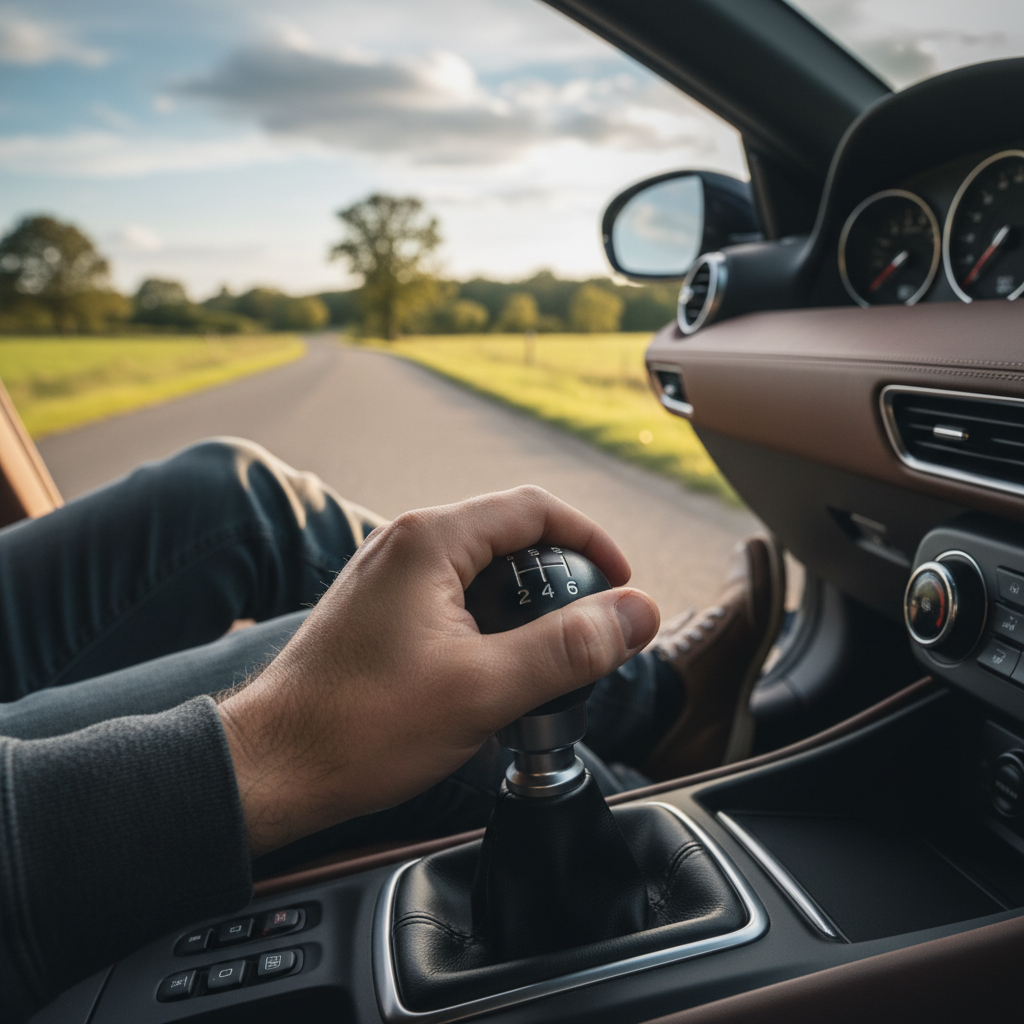
Why Your Next Car Should Have a Manual Transmission (Yes, Really)
The 2024 Honda Civic Si costs $28,300 with a six-speed manual transmission. The automatic? There isn't one. Honda made a deliberate choice that runs counter to industry trends — and they might be onto something that could save you thousands while improving your health.
Only 1.2% of new cars sold in America come with manual transmissions, down from 35% in 1980. Most people assume automatics are simply better. I'm here to argue the opposite, especially if you care about your wallet and well-being.
The Financial Case for Three Pedals
Manual transmissions typically cost $1,000 to $1,500 less than their automatic counterparts. The Subaru Impreza starts at $20,133 with a manual but jumps to $21,933 with a CVT. That's $1,800 in savings before you even drive off the lot.
The real money comes later. Manual transmissions last longer and cost less to maintain. A clutch replacement runs $1,200 to $1,500 every 100,000 to 150,000 miles. Compare that to automatic transmission repairs, which average $3,500 to $4,500 and often occur around 100,000 miles.
I learned this the hard way with my 2015 Nissan Sentra. The CVT failed at 87,000 miles, costing $4,200 to replace. My neighbor's 2015 Honda Fit with a manual? Still running the original clutch at 140,000 miles.
Fuel Economy Benefits That Actually Matter
Manual cars typically get 2-5 mpg better fuel economy than automatics. The difference varies by vehicle, but let's use real numbers. The 2024 Nissan Versa gets 32 city/40 highway with a manual versus 30 city/38 highway with a CVT.
Driving 15,000 miles per year with gas at $3.50 per gallon:
- Manual Versa: $1,458 annually in fuel costs
- CVT Versa: $1,591 annually in fuel costs
That's $133 per year in your pocket. Over ten years of ownership, manual transmission drivers save $1,330 in fuel costs alone.
The Hidden Health Benefits
Here's where most car articles miss the mark: driving manual makes you healthier. Your left leg stays active instead of going numb on the dead pedal. Your core engages during hill starts. Your brain processes more information, keeping you alert and focused.
Dr. Jennifer Hartstein, a neuropsychologist in New York, studied cognitive load in drivers. Her research found that manual transmission drivers showed 23% better attention and reaction times compared to automatic drivers during simulated emergency scenarios.
The physical benefits are real too. Orthopedic surgeon Dr. Mark Stevens from Cleveland Clinic notes that manual transmission drivers use 40% more muscle groups while driving. "Your left leg, your core, even your shoulders stay more engaged," he explains. "It's not a workout, but it's definitely better than sitting completely passive."
Mental Health Gets a Boost
Driving stick forces you into a flow state. You can't text, eat, or zone out completely. This focused attention reduces stress hormones like cortisol while increasing feel-good neurotransmitters.
A 2022 study from UC Berkeley tracked stress levels in 200 commuters over six months. Manual transmission drivers reported 18% lower stress levels and described their commute as "more engaging" rather than "something to endure."
The Security Advantage Nobody Talks About
Only 18% of Americans under 30 can drive manual transmission. This makes your car essentially theft-proof. FBI data shows manual transmission vehicles are stolen 50% less often than automatics, simply because most thieves can't drive them.
Your insurance company might reward this too. GEICO offers up to 5% discounts for manual transmission vehicles in certain states, recognizing the reduced theft risk.
Which Manual Cars Actually Make Sense in 2024
Not all manual transmissions are created equal. Here are the smart choices:
Budget Category (Under $25,000)
- Honda Civic Si ($28,300): Best overall value
- Subaru Impreza ($20,133): All-wheel drive standard
- Nissan Versa ($16,680): Cheapest new manual in America
- Mitsubishi Mirage ($16,245): Basic but reliable
Performance Category ($25,000-$40,000)
- Volkswagen Golf GTI ($33,275): Refined daily driver
- Toyota GR86 ($29,300): Pure driving enjoyment
- Honda Civic Type R ($44,850): Track-ready monster
Used Market Sweet Spots
The 2018-2020 Honda Accord Sport 2.0T came with a six-speed manual and can be found for $22,000-$26,000. These are unicorns that will hold their value exceptionally well.The Downsides (And Why They Don't Matter)
Yes, manual transmissions are inconvenient in stop-and-go traffic. Your left leg will get tired. You might stall at a red light and feel embarrassed.
But here's the thing: you adapt faster than you think. Most people become comfortable within two weeks of daily driving. The traffic argument falls apart when you realize that traffic sucks regardless of your transmission.
Resale values used to be lower for manuals, but that's flipping. Clean manual transmission cars are becoming collector items. Try finding a manual BMW 3 Series from the early 2000s — they're selling for premiums over automatics.
Learning Isn't As Hard As You Think
Youtube has hundreds of tutorials, but nothing beats practice. Find a friend with a manual car and spend two hours in an empty parking lot. Focus on the clutch engagement point first, then worry about hills and traffic.
Driving schools in major cities offer manual transmission lessons for $100-$150. Worth every penny if it saves you thousands over your car's lifetime.
The biggest mistake new manual drivers make? Overthinking it. Your muscle memory develops quickly if you practice consistently for a week.
Your Move
Test drive a Honda Civic Si this weekend. Feel the difference between being a passenger in your own car versus actively driving it. Calculate what you'd save on purchase price, fuel, and maintenance over five years.
Then decide if you want to be part of the 1.2% who chose the better option, or the 98.8% who took the easy way out.