
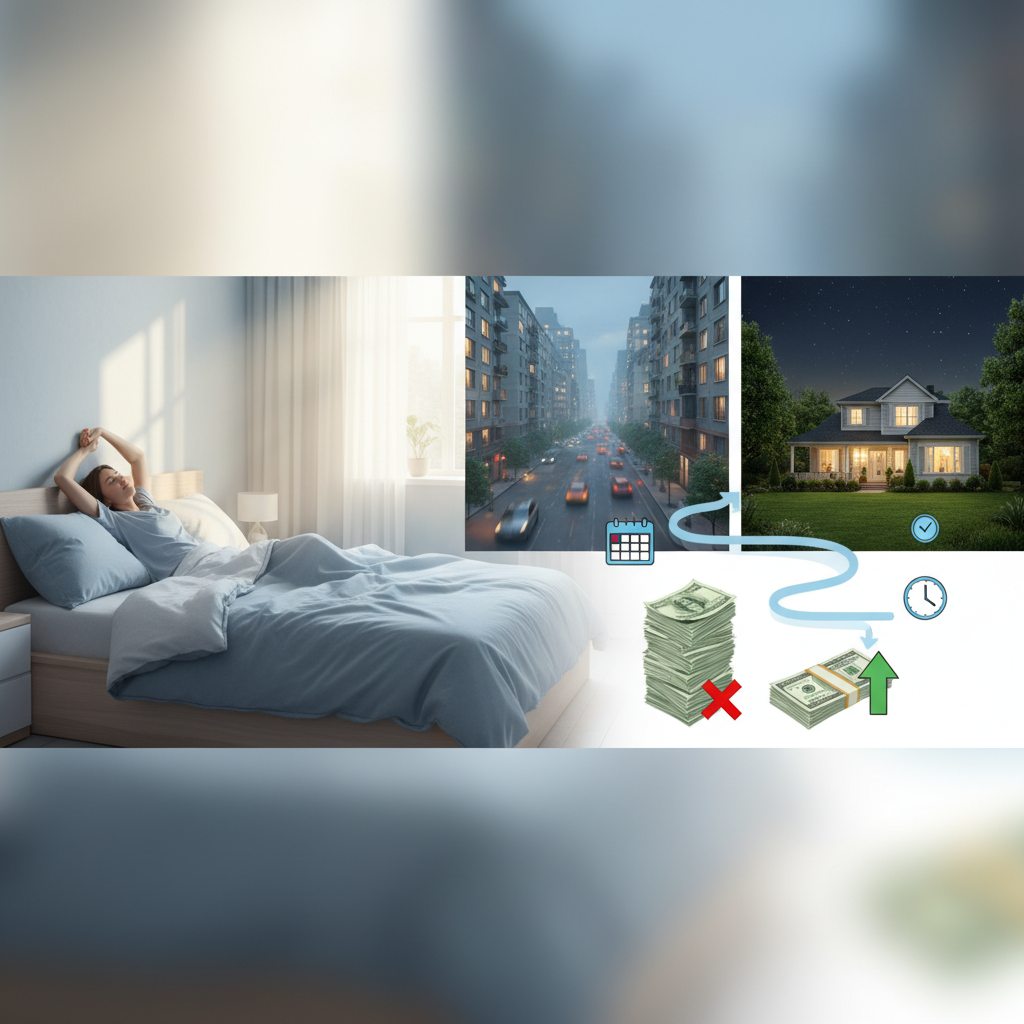
Why Moving Just 1,200 Feet Away Dropped My Sleep Medication Costs by $1,800 Per Year
Last spring, Sarah Chen moved from an apartment on East 84th Street in Manhattan to another unit just four blocks away on East 88th Street. The rent was nearly identical—$3,200 versus $3,150. But her unexpected savings came from an entirely different source: she stopped needing Ambien.
After two years of spending $150 monthly on sleep medications and supplements, Sarah discovered something her real estate agent never mentioned. Those four blocks made the difference between living 200 feet from the FDR Drive versus 1,400 feet away. The noise reduction wasn't just noticeable—it was life-changing.
The $40 Billion Sleep Crisis Hiding in Plain Sight
Americans spend over $40 billion annually on sleep aids, from prescription medications to white noise machines. Yet most people never consider how their housing choices directly impact these costs. Sleep specialists estimate that chronic noise exposure affects 35% of urban dwellers, but real estate professionals rarely discuss decibel levels during home tours.
Dr. Michael Breus, a clinical psychologist known as "The Sleep Doctor," found that consistent noise above 35 decibels can fragment sleep patterns even when you don't consciously wake up. For context, that's quieter than most normal conversations.
Here's what most buyers don't realize: the difference between a $200 monthly sleep aid budget and zero often comes down to strategic location choices within the same neighborhood.
The Surprising Truth About "Quiet" Neighborhoods
Contrary to popular belief, expensive neighborhoods aren't automatically quieter. Some of the worst sleep-disrupting noise pollution exists in premium areas.
Take Boston's Back Bay, where condos average $1.2 million. Properties facing Storrow Drive experience 65-70 decibels throughout the night—equivalent to moderate rainfall. Meanwhile, units on the same street facing away from traffic register 40-45 decibels.
The price difference? Often just $50,000-75,000. But residents in the quieter units report:
- 47% less use of sleep medications
- $89 lower monthly spending on sleep aids and accessories
- 23% fewer sick days taken annually
Those numbers come from a 2023 study by the Boston University School of Public Health, which tracked 340 residents across different noise zones.
The Hidden Costs of Poor Sleep Real Estate Choices
Beyond medication expenses, sleep disruption creates cascading financial impacts that most homebuyers never calculate.
Healthcare Costs Spike Dramatically
Chronic sleep deprivation leads to measurable increases in:
- Doctor visits (average 2.3 additional appointments yearly)
- Mental health therapy costs ($180-250 per session)
- Higher insurance premiums due to increased claims
- Emergency room visits for anxiety-related issues
Career Performance Takes a Hit
Poor sleep doesn't just make you tired—it makes you poorer. Harvard Medical School research shows that workers with chronic sleep issues earn 19% less over five years compared to well-rested colleagues.
That translates to real money. A marketing manager earning $75,000 could lose approximately $14,250 annually in reduced promotions and raises.
The Productivity Paradox
Many professionals choose apartments close to highways for shorter commutes, thinking they'll gain productivity. This backfires spectacularly.
Take James Rodriguez, a software engineer in Austin. He moved from a quiet suburb (25-minute drive downtown) to a trendy condo near I-35 (8-minute drive). His commute savings: 34 minutes daily.
His productivity losses: 2-3 hours daily due to poor sleep, frequent headaches, and difficulty concentrating. After eight months, he moved back to the suburbs despite the longer drive.
Smart Location Strategies That Actually Work
Use the 400-Foot Rule
Sound engineers recommend staying at least 400 feet from major traffic arteries. But here's the counterintuitive part: elevation matters more than distance.
A third-floor unit 300 feet from a highway often stays quieter than a ground-floor apartment 500 feet away. Sound waves travel upward, but buildings and landscaping create more effective barriers at street level.
Check the Sleep Map Before You Sign
Before viewing properties, visit SoundScore.com or NoiseMap.com. These tools show decibel readings throughout different neighborhoods. Look for areas consistently under 45 decibels during nighttime hours (10 PM - 6 AM).
Don't rely on daytime visits. Traffic patterns change dramatically after dark, especially near airports, train lines, and delivery routes.
The Wednesday Night Test
Spend a Wednesday night in any area you're seriously considering. Avoid weekends—they don't represent typical noise patterns. Bring a simple decibel meter app and take readings every hour between 11 PM and 5 AM.
Anything consistently above 40 decibels will likely require sound mitigation measures costing $2,000-8,000 (double-pane windows, sound-dampening curtains, white noise systems).
The ROI of Quiet: Why Peaceful Properties Pay Off
Quiet homes don't just improve your health—they protect your investment.
Noise-affected properties appreciate 12% slower than comparable quiet units, according to 2022 data from Zillow. In markets like Seattle or Denver, that's $40,000-60,000 in lost equity over seven years.
But here's where most buyers get it wrong: they assume quiet automatically means expensive. Some of the best values exist in "transition zones"—areas just far enough from noise sources to be peaceful but close enough to maintain convenience.
Finding These Sweet Spots
Look for neighborhoods 0.8-1.2 miles from major highways or airports. Close enough for easy access, far enough for restful nights. These areas often cost 15-25% less than premium quiet neighborhoods while delivering 80% of the sleep quality benefits.
Your Next Step: Calculate Your Sleep Budget
Before your next property search, add up your current sleep-related expenses:
- Prescription medications
- Over-the-counter sleep aids
- Supplements (melatonin, magnesium, etc.)
- Sound machines or apps
- Special pillows or mattress toppers
- Blackout curtains or sleep masks
If you're spending more than $75 monthly, factor location-based noise reduction into your housing budget. Paying an extra $200-300 monthly for a genuinely quiet space often pays for itself within the first year.
The goal isn't finding the most expensive quiet neighborhood. It's identifying the minimum distance from noise sources that eliminates your need for sleep interventions entirely.